One of the biggest questions most Bitcoin enthusiasts would have about the cryptocurrency is whether or not Bitcoin exchange traded funds will be regulated by the US or other authorities abroad.
While Bitcoin and other cryptocurrencies have already gained a lot of attraction from investors all over the world, many institutions such as government agencies, banks and other entities have yet to accept the digital currency.
According to Ryan Radloff, head of investor relations at XBT Provider, it is really just a stalemate between banks and regulators, wherein banks will only start accepting the cryptocurrencies when the regulators do. Though this is the case for most countries, there are several countries such as Sweden whose Nasdaq has already included cryptocurrencies in their public exchange.
Bitcoin status in the US
Bitcoin’s status and classification as per the US regulators have still not been decided as of yet. The SEC has not made any comment in classifying Bitcoin yet and it seems like it will not happen anytime soon.
The SEC has already rejected two entities that aim to provide Bitcoin ETFs to potential investors. From the legal side, it seems as though Bitcoin is not doing very well due to this hurdle.
According to Radloff, it doesn’t look like Bitcoin will be accepted anytime soon following the two rejections that the SEC made, though this may all change in the future if the SEC becomes convinced by the cryptocurrency.
Bitcoin in other countries
Although the US is very stern with their decision on the Bitcoin issue, there are other countries that seem to be more open to the cryptocurrency. Other countries such as Sweden, Switzerland, Japan and Italy have accepted Bitcoin in their public exchange and already have regulations regarding it. Radloff also stated that in the future, he is expecting more countries to accept cryptocurrencies.
Notably, there are exchange-traded Bitcoin products in Europe, but they aren't ETFs, they are exchange-traded notes, which are similar to ETFs but carry different risks. However, European investors and regulators are more accustomed to ETNs, said Radloff.
The COINXBE and COINXBT ETNs are listed on the Nasdaq Nordic. Another ETN-style Bitcoin product was recently delisted from the Gibraltar Stock Exchange.
Nick Cowan, managing director of the latter exchange, said he's expecting two similar Bitcoin products to be listed soon, as well as a third based on a basket of several cryptocurrencies.
Convincing the US
While the market is still relatively new, it has already gotten a lot of attention from investors who have drawn a lot of data from it. However, the only problem would be the government regulations and licenses. A report by the University of Cambridge’s Center for Alternative Finance stated that 46 percent of exchanges are not government regulated. This means that the other 54 percent are not operating with licenses.
While it may be difficult to convince US regulators to accept the digital currency, it is still possible as the US is looking for transparency and stability before they consider allowing it. The reason is that it involves a lot of money and it is quite a risk on their end.
Nevertheless, it would seem as though the US will not be one of the next countries to accept the cryptocurrency. However, it will only be a matter of time before this event happens. When the US sees a lot of other countries doing it, they will most likely join in the fray.

Contraction of Total Cryptocurrency Market Cap May Be Inevitable

The milestone of the cryptocurrency markets attaining $100 billion status has been largely attributed to bitcoin’s impressive growth in Asia during recent months, with bitcoin’s market cap representing approximately 45% of the total cryptocurrency markets. Since the beginning of 2017 the price of a single bitcoin has tripled, creating an all-time high of over $2900USD on Bitstamp.
Over the last 7 years Bitcoin’s price has grown by an average of 0.3% daily, culminating in Bitcoin’s current market cap of over $45bnUSD, renders the digital currency of comparable size to Tesla – who currently boast a $50bnUSD market cap. With Bitcoin steadily continuing to absorb capital from new markets, this trend may continue to hold up over the longer term. New investors should exercise caution in interpreting these facts as evidence of Bitcoin’s inevitable unending price ascension, as the price of a single bitcoin has gone up over 1000% since 2015.
Contraction of Total Cryptocurrency Market Cap May Be Inevitable Towards End of 2017
Entering the 12-digit club ranks the cryptocurrency ecosystem alongside major banks such as Commonwealth Bank of Australia ($105bnUSD market cap), Royal Bank of Canada ($100bnUSD market cap), and puts the cryptocurrency ecosystem of comparable size to McDonalds US – who currently have a total market cap of approximately $125bnUSD. The total cryptocurrency market capitalization has now surpassed major companies such as Ford and Delta Airlines.
A Contraction In The Share Of The Total Market Cap Represented By Altcoins May Be Inevitable
Although market sentiment across the altcoin markets currently comprises euphoric bullishness, many speculators are preparing for the party to soon come to an end. The extreme percentage gains seen by many altcoins are very likely to be unsustainable long-term, suggesting that a contraction in the share of the total cryptocurrency market cap represented by altcoins may be inevitable. If so, the only question is: when?
Contraction of Total Cryptocurrency Market Cap May Be Inevitable Towards End of 2017Despite the intensity of the current cryptocurrency bubble, a recent resurgence in Chinese trading volume following a return to normal operations regarding fiat deposits and withdrawals may drive further growth in the total market capitalization of cryptocurrencies in the immediate future.
Will altcoins be able to retain over a 50% share in total cryptocurrency market capitalization? Or will Bitcoin again comprise over half of the total cryptocurrency ecosystem? Share your thoughts below!
Via: news.bitcoin.com
Newly discovered flaw in computers raises fears of another WannaCry
A newly found flaw in widely used networking software leaves tens of thousands of computers potentially vulnerable to an attack similar to that caused by WannaCry, which infected more than 300,000 computers worldwide, cybersecurity researchers said on Thursday.
The US Department of Homeland Security on Wednesday announced the vulnerability, which could be exploited to take control of an affected computer, and urged users and administrators to apply a patch.
Rebekah Brown of Rapid7, a cybersecurity company, said that there were no signs yet of attackers exploiting the vulnerability in the 12 hours since its discovery was announced. But, she said it had taken researchers only 15 minutes to develop malware that made use of the hole. "This one seems to be very, very easy to exploit," she said.
Rapid7 said it had found more than 100,000 computers running vulnerable versions of the software, Samba, free networking software developed for Linux and Unix computers. There are likely to be many more, it said in response to e-mailed questions.
Most of the computers found are running older versions of the software and cannot be patched, said Brown. Some of the computers appear to belong to organisations and companies, she said, but most were home users. The vulnerability could potentially be used to create a worm like the one which allowed WannaCry to spread so quickly, Brown said, but that would require an extra step for the attacker.
Cybersecurity researchers have said they believe North Korean hackers were behind the WannaCry malware, which encrypted data on victims' computers and demanded bitcoin in return for a decryption key.
The US Department of Homeland Security on Wednesday announced the vulnerability, which could be exploited to take control of an affected computer, and urged users and administrators to apply a patch.
Rebekah Brown of Rapid7, a cybersecurity company, said that there were no signs yet of attackers exploiting the vulnerability in the 12 hours since its discovery was announced. But, she said it had taken researchers only 15 minutes to develop malware that made use of the hole. "This one seems to be very, very easy to exploit," she said.
Rapid7 said it had found more than 100,000 computers running vulnerable versions of the software, Samba, free networking software developed for Linux and Unix computers. There are likely to be many more, it said in response to e-mailed questions.
Most of the computers found are running older versions of the software and cannot be patched, said Brown. Some of the computers appear to belong to organisations and companies, she said, but most were home users. The vulnerability could potentially be used to create a worm like the one which allowed WannaCry to spread so quickly, Brown said, but that would require an extra step for the attacker.
Cybersecurity researchers have said they believe North Korean hackers were behind the WannaCry malware, which encrypted data on victims' computers and demanded bitcoin in return for a decryption key.
Freebitco.in win up to $200 in free bitcoins!
FREE BITCOINS EVERY HOUR Try your luck every hour playing our simple game and you could win up to $200 in free bitcoins!. Click sign up here.


- WIN UP TO $200 IN FREE BITCOINS
- MULTIPLY YOUR BITCOINS PLAYING HI-LO
- WIN HI-LO JACKPOTS UP TO 1 BITCOIN
- FREE WEEKLY LOTTERY WITH BIG PRIZES
- BITCOIN SAVINGS ACCOUNT WITH DAILY INTEREST
- 50% REFERRAL COMMISSIONS FOR LIFE
Bitcoin Markets Increasingly Reflect Global Transition Towards ‘The Asian Century’
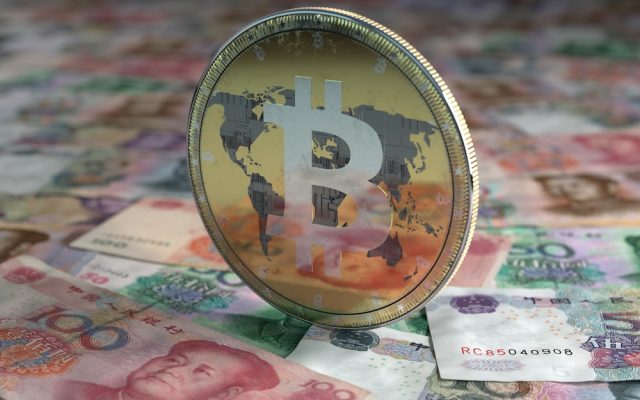
Chinese bitcoin exchange rates has taken a 3% price lead following announcements that two of the three ‘big exchanges’ in China will again be accepting deposits and withdrawals in fiat currencies.
Bitcoin Markets Increasingly Reflect Global Transition Towards ‘The Asian Century’
China’s bitcoin markets had come to resemble a sleeping giant in recent weeks, following a crackdown on high leveraged margin trading by the PBOC earlier this year. The fall-out saw restriction being placed on the margin thresholds available to Chinese traders, and resulted in a 90% reduction in trading volume across the major Chinese exchanges.
The announcement that two of the exchanges have returned to operations as usual regarding deposits and withdrawals has been the catalyst for Bitcoin’s sharp rise in price over recent days, culminating in the establishment of a new all-time high of over 20,000 CNY – evidencing that China may be able to again rival Japan in the near future for market dominance, despite trading volume having not recovered since the crackdown.
The resurgence of Chinese bitcoin trading comes after a long period of dramatically rising growth of Bitcoin trading volume from major economic powers within the Asian region.
Japan rapidly rose to a position of dominance within Bitcoin starting in 2016, which has been assisted by the introduction of an extremely Bitcoin-friendly regulatory framework across the entire nation.
In South Korea bitcoin is currently trading at prices more than $1000 higher than current US prices, owing to the introduction of permissive regulations, significant increases in user adoption, and the inaccessibility for foreign citizens to access South Korean bank accounts.
India also saw a dramatic surge in bitcoin usage towards the end of 2016, following an intensification of the war on cash in an attempt to centralize and restrict the financial freedoms of the nation’s most vulnerable citizens.
This dramatic growth in bitcoin user adoption throughout the Asian regions is forecasting an increasingly reduced influence and market share enjoyed by US markets, which briefly overtook China’s trading volume following the fallout from the PBOC interventions for the first time since 2013.
Bitcoin Markets Increasingly Reflect Global Transition Towards ‘The Asian Century’
Despite recent baby-steps toward more inclusive and fostering regulatory frameworks pertaining to Bitcoin on the part of Western governments, it appears that the Asian markets will increasingly dominate the cryptocurrency markets.
Increased South African Bitcoin Adoption Highlights Need For Taxation Clarity
With Localbitcoins trading volume up over 20% in recent weeks and over 1,000 merchants accepting bitcoin in South Africa, it’s clear that the nation’s lawmakers must provide a regulatory framework for businesses and speculators to operate within.
Also Read: Bitcoin Startups Believe Africa Is Fertile Ground for Crypto-Solutions
The South African Reserve Bank Has Not Released A Position Paper On Virtual Currencies since 2014
The recent increase in South African Localbitcoins trading volume can be interpreted as an indication of a real increase in bitcoin adoption, as supported by trading volume on the nation’s major exchange, Luno, also seeing a steady rise.
In 2017 many developed nations have begun to move towards introducing permissive regulation designed to encourage growth within Bitcoin’s associated industries. In recent months Japan has eliminated taxation on Bitcoin trading, declared Bitcoin to be exempt from consumption tax, and eliminated the possibility of double taxation on trading. Australia has moved towards ending its long-standing double taxation on bitcoin by proposing that transactions involving digital currencies no longer be subject to Goods and Services Taxation, and South Korea has also introduced permissive regulations regarding Bitcoin and other digital currencies.

Increased South African Bitcoin Adoption Highlights Need For Taxation Clarity
Localbitcoins’ South Africa chart.
Absence Of Clear Legal Scheduling Likely Has A Stifling Effect On Investment And Innovation
Despite progressive moves on the part of South Africa’s developed counterparts, the South African Reserve Bank has not released a Position Paper on Virtual Currencies since 2014 when Bitcoin’s market capitalization was less than a quarter of its current $46bn USD total, which many citizens feel emphasizes the need for regulators to catch up with the industry.
South Africa recognizes the basic rights of citizens to own, purchase, mine, and conduct private transactions with bitcoin, yet no tax regime currently exists for bitcoin mining or trading. Bitcoin is not currently classified under any asset or currency status, leaving businesses operating with virtual currencies unsure as to whether or not they are likely to incur retroactive capital gains taxation in the future.
Despite the ambiguity surrounding taxation, some have argued that South African regulators are highly permissive toward blockchain technology – arguing that the absence of a ratified legal framework does not hinder bitcoin-related enterprises from conducting their business.
Although the South African Revenue Service have stated that both speculation or transactions conducted in Bitcoin are subject to general South African tax law, the absence of clear legal scheduling pertaining to digital currencies likely has a stifling effect on investment and innovation within the South African bitcoin economy.
What regulatory approach do you think South Africa should adopt regarding Bitcoin? Let us know in the comments below!
Also Read: Bitcoin Startups Believe Africa Is Fertile Ground for Crypto-Solutions
The South African Reserve Bank Has Not Released A Position Paper On Virtual Currencies since 2014
The recent increase in South African Localbitcoins trading volume can be interpreted as an indication of a real increase in bitcoin adoption, as supported by trading volume on the nation’s major exchange, Luno, also seeing a steady rise.
In 2017 many developed nations have begun to move towards introducing permissive regulation designed to encourage growth within Bitcoin’s associated industries. In recent months Japan has eliminated taxation on Bitcoin trading, declared Bitcoin to be exempt from consumption tax, and eliminated the possibility of double taxation on trading. Australia has moved towards ending its long-standing double taxation on bitcoin by proposing that transactions involving digital currencies no longer be subject to Goods and Services Taxation, and South Korea has also introduced permissive regulations regarding Bitcoin and other digital currencies.

Increased South African Bitcoin Adoption Highlights Need For Taxation Clarity
Localbitcoins’ South Africa chart.
Absence Of Clear Legal Scheduling Likely Has A Stifling Effect On Investment And Innovation
Despite progressive moves on the part of South Africa’s developed counterparts, the South African Reserve Bank has not released a Position Paper on Virtual Currencies since 2014 when Bitcoin’s market capitalization was less than a quarter of its current $46bn USD total, which many citizens feel emphasizes the need for regulators to catch up with the industry.
South Africa recognizes the basic rights of citizens to own, purchase, mine, and conduct private transactions with bitcoin, yet no tax regime currently exists for bitcoin mining or trading. Bitcoin is not currently classified under any asset or currency status, leaving businesses operating with virtual currencies unsure as to whether or not they are likely to incur retroactive capital gains taxation in the future.
Despite the ambiguity surrounding taxation, some have argued that South African regulators are highly permissive toward blockchain technology – arguing that the absence of a ratified legal framework does not hinder bitcoin-related enterprises from conducting their business.
Although the South African Revenue Service have stated that both speculation or transactions conducted in Bitcoin are subject to general South African tax law, the absence of clear legal scheduling pertaining to digital currencies likely has a stifling effect on investment and innovation within the South African bitcoin economy.
What regulatory approach do you think South Africa should adopt regarding Bitcoin? Let us know in the comments below!
What is bitcoin?

Bitcoin is a cryptocurrency and a digital payment system invented by an unknown programmer, or a group of programmers, under the name Satoshi Nakamoto. It was released as open-source software in 2009 The system is peer-to-peer, and transactions take place between users directly, without an intermediary. These transactions are verified by network nodes and recorded in a public distributed ledger called a blockchain. Since the system works without a central repository or single administrator, bitcoin is called the first decentralized digital currency. Besides being created as a reward for mining, bitcoin can be exchanged for other currencies,products, and services in legal or black markets As of February 2015, over 100,000 merchants and vendors accepted bitcoin as payment. According to a research produced by Cambridge University in 2017, there are 2.9 to 5.8 million unique users using a cryptocurrency wallet, most of them using bitcoin.
Subscribe to:
Comments (Atom)